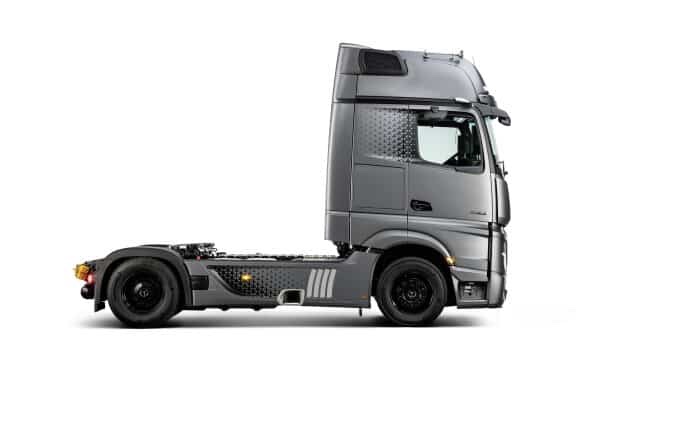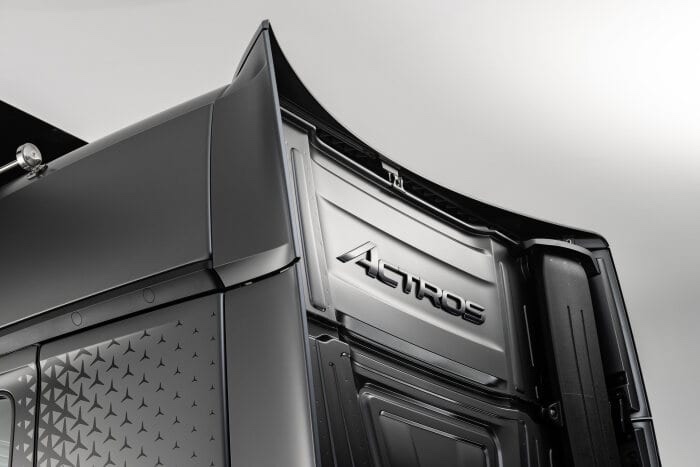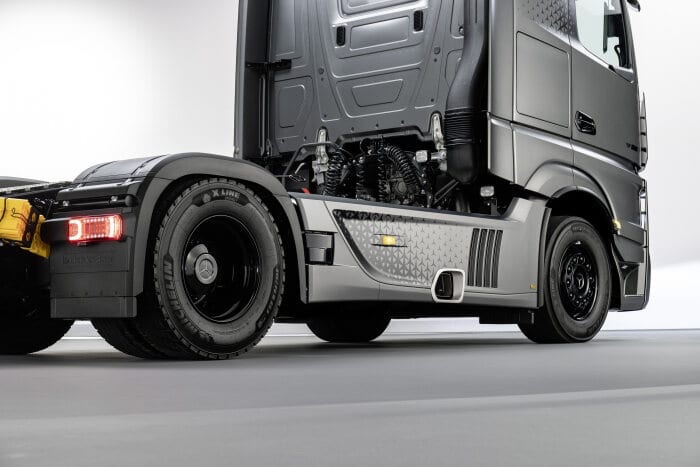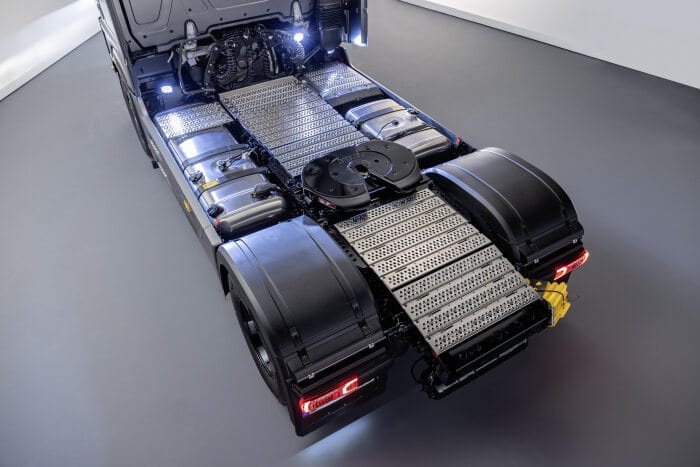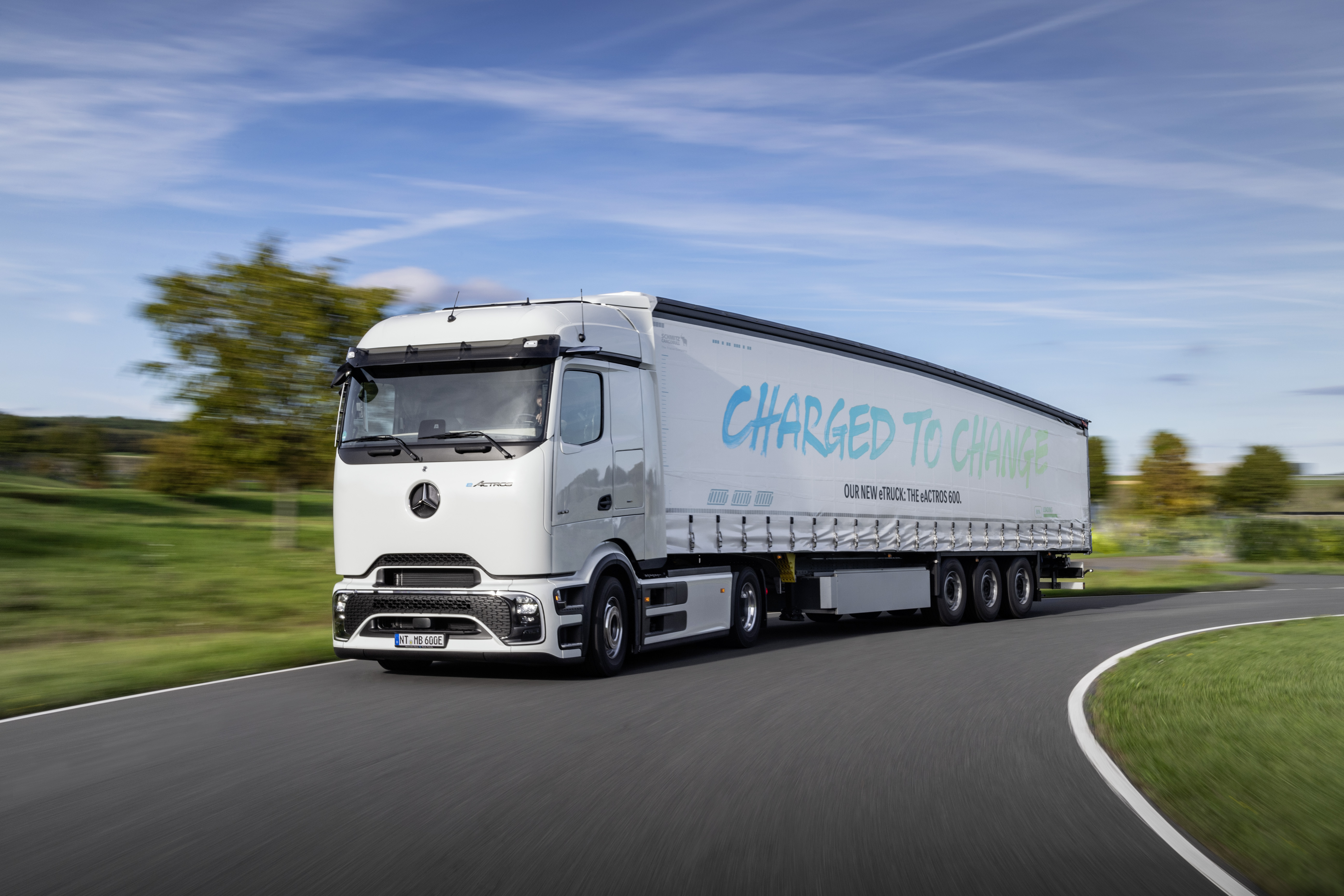
Mercedes-Benz eActros 600 Launched

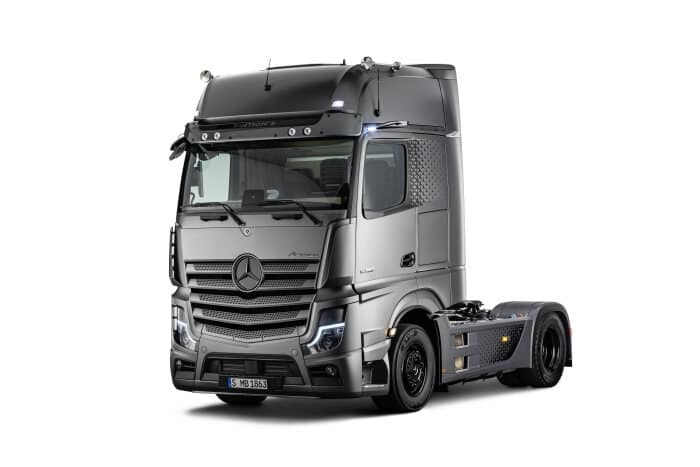
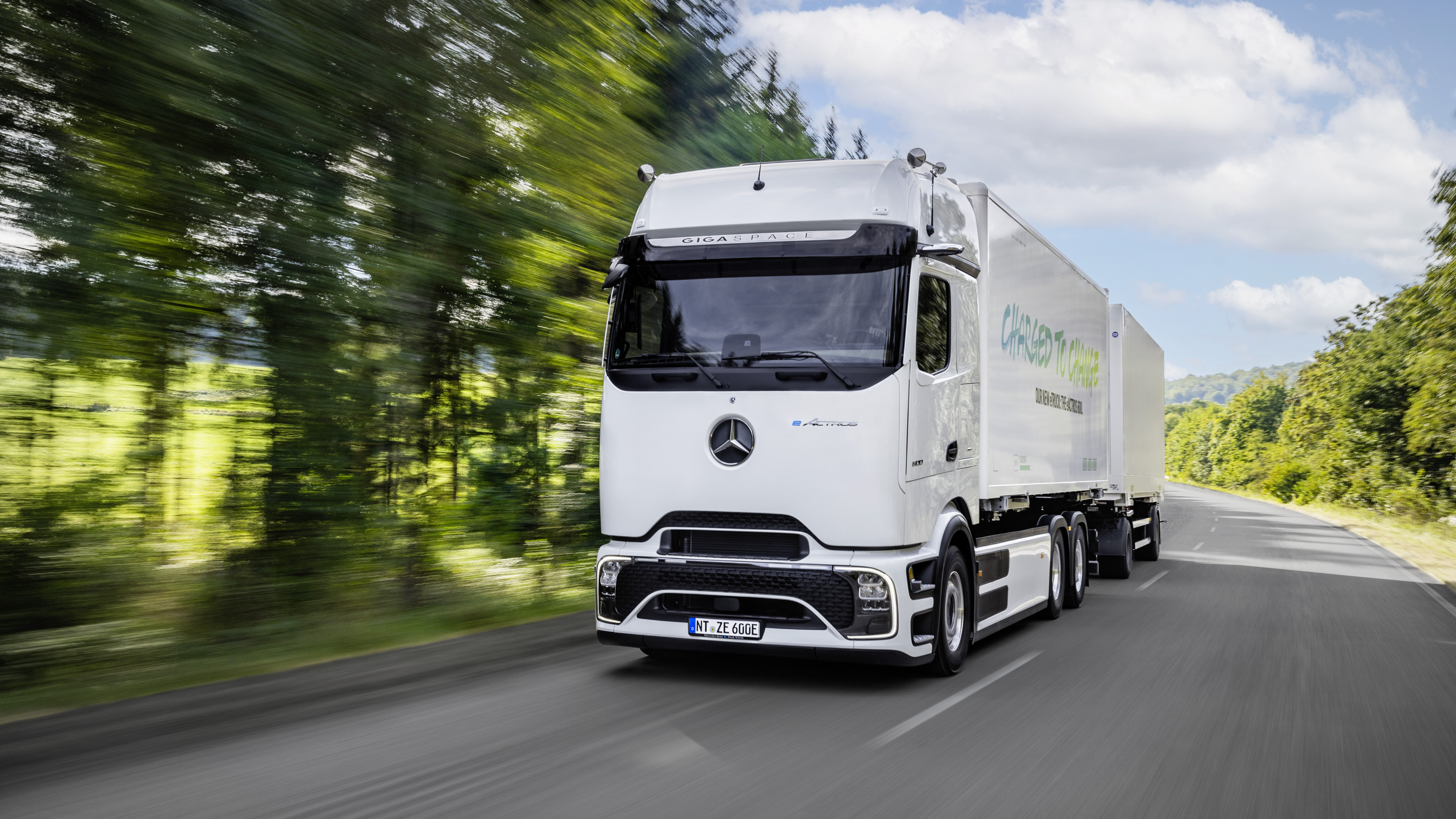
Finally Daimler Truck AG have launched their long distance tractor unit offering to the world. I will happily say i love the look of it and that is a good start. It may be a facelift and redesign around the current cab, but when the cab interior works so well how would you actually improve it. This truck is capable of 500Kn / 310 miles on a single charge, which makes it much more of a viable option for some long distance work. There is a lot of information about the truck in the press release, so i have given you what i think are the parts of the seven page release, that you will actually want to read. This will put Daimler out there with the good looking Volvo option, although we will have to wait until early 2025 for RHD options here in the UK I am told. If you would like to read the full complete press release then please click the link HERE.

The eActros 600 heavy-duty electric truck is planned to define the new standard in terms of technology, sustainability, design and profitability

  • E-truck to replace majority of diesel trucks in the segment over the long term
  • Range of 500 kilometers1 without intermediate charging
  • Significantly more than 1,000 kilometers per day with intermediate charging during the legally prescribed driver breaks possible
  • Gross combination weight of up to 44 tons
  • Payload of around 22 tons with standard trailer
  • Start of sales this year – start of series production planned for end of 2024
  • New design language of the driver’s cab characterized by efficient aerodynamics
  • More than 80 percent CO2 savings2 compared to diesel-truck over entire life cycle possible
  • Karin Rådström, CEO Mercedes-Benz Trucks: “The eActros 600 stands for the transformation of road freight transport towards CO2-neutrality like no other truck with a three-pointed star. It is characterized by highly innovative drive technology that can offer our customers particularly high energy efficiency and thus profitability. This makes entry into e-mobility even more attractive for fleet operators.”
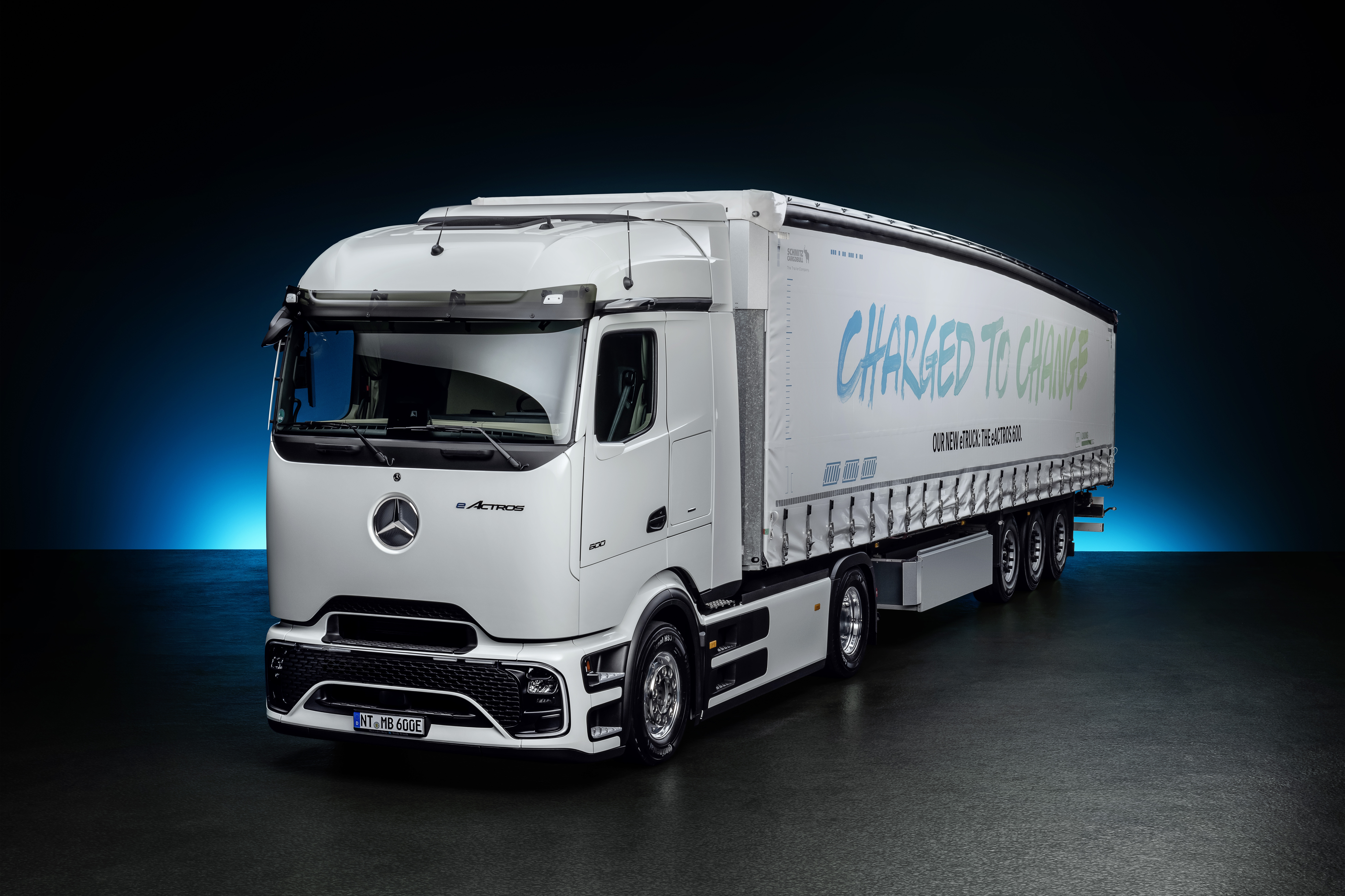
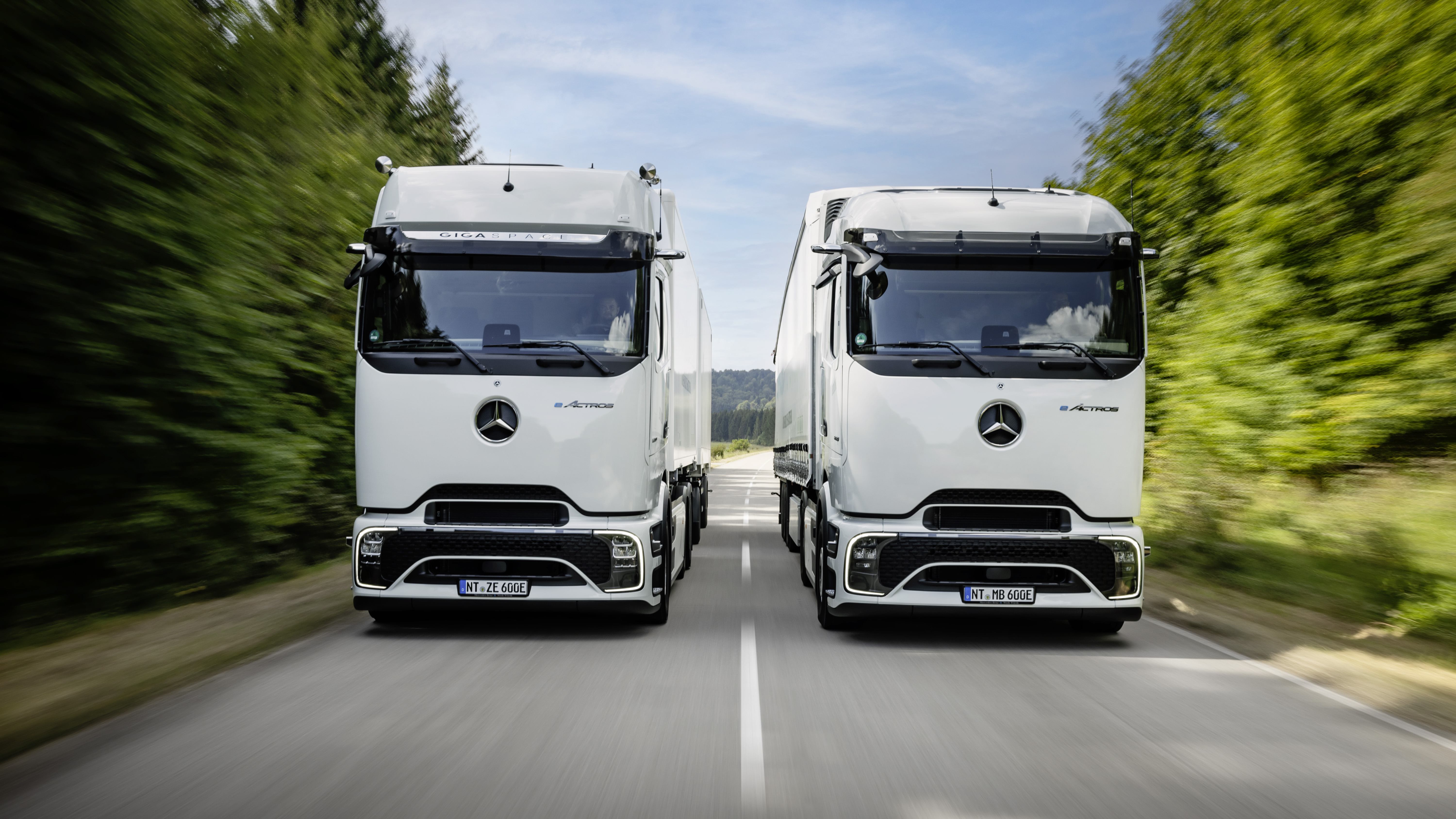
The high battery capacity of more than 600 kilowatt hours – hence the model designation 600 – and a new, particularly efficient electric drive axle developed in-house, enable the e-truck to achieve a range of 500 kilometers1 without intermediate charging. Therefore, the eActros 600 will be able to travel significantly more than 1,000 kilometers per day. This is made possible by intermediate charging during the legally prescribed driver breaks – even without megawatt-charging. Around 60 percent of long-distance journeys of Mercedes-Benz Trucks customers in Europe are shorter than 500 kilometers anyway, which means charging infrastructure at the depot and at the loading and unloading points is sufficient in such cases. For all other uses, continual expansion of public charging infrastructure is vital in order to make the electric truck viable for long-distance haulage across Europe. In addition to CCS charging with up to 400 kW, the eActros 600 will later also enable megawatt charging (MCS). From the start of sales, customers can order a pre-installation for this. As soon as MCS technology becomes available and is standardized across manufacturers, it is planned to be retrofittable for these models of the eActros 600. The batteries can be charged from 20 to 80 percent in about 30 minutes3 at a suitable charging station with an output of around one megawatt.
The vehicle is technically designed for a gross combination weight of up to 44 tons. With a standard semitrailer, the eActros 600 has a payload of around 22 tons in the EU. In some cases, national law may permit a higher payload. Visually, the e-truck is characterized by a fundamentally new, puristic design with clear lines and an aerodynamic shape. When it comes to profitability for fleet operators, the electric truck is intended to set new standards, over the long term replacing the majority of diesel trucks in the important long-haul transport segment. The core of Mercedes-Benz Trucks‘ concept for battery-electric long-distance transport is to offer customers a holistic solution consisting of vehicle technology, consulting, charging infrastructure and services.
Sales of the electric truck start this year. The start of series production is planned for the end of 2024. In addition to the tractor unit, Mercedes-Benz Trucks will also produce rigid variants of the eActros 600 right from market launch, offering customers further possible applications for all-electric transport. A fleet of around fifty prototype vehicles is currently being built, some of which are also to be put into practical testing with first customers in a next step.
Karin Rådström, CEO Mercedes-Benz Trucks: “The eActros 600 stands for the transformation of road freight transport towards CO2-neutrality like no other truck with a three-pointed star. It is characterized by highly innovative drive technology that can offer our customers particularly high energy efficiency and thus profitability. This makes entry into e-mobility even more attractive for fleet operators.”
Electricity price and toll system decisive for profitability compared to diesel trucks
The time period within which fleet operators can achieve cost parity with a comparable diesel truck using the eActros 600 in long-distance haulage differs from country to country, in particular depending on the electricity and diesel price and toll system. In the large transit countries of France and Germany, for example, a low electricity price and the planned CO2-based truck toll, respectively, have a positive effect on the operational costs of battery-electric trucks. This means that the eActros 600 can be more profitable than a diesel long-haul truck within the average vehicle holding period of around five years or after around 600,000 kilometers – despite a purchase price that is around two to two and a half times higher than the diesel equivalent. Government subsidization of e-trucks and charging infrastructure is a key lever providing support in ramping up the market. More than 80 percent CO2 savings possible compared to diesel trucks over the entire life cycle.
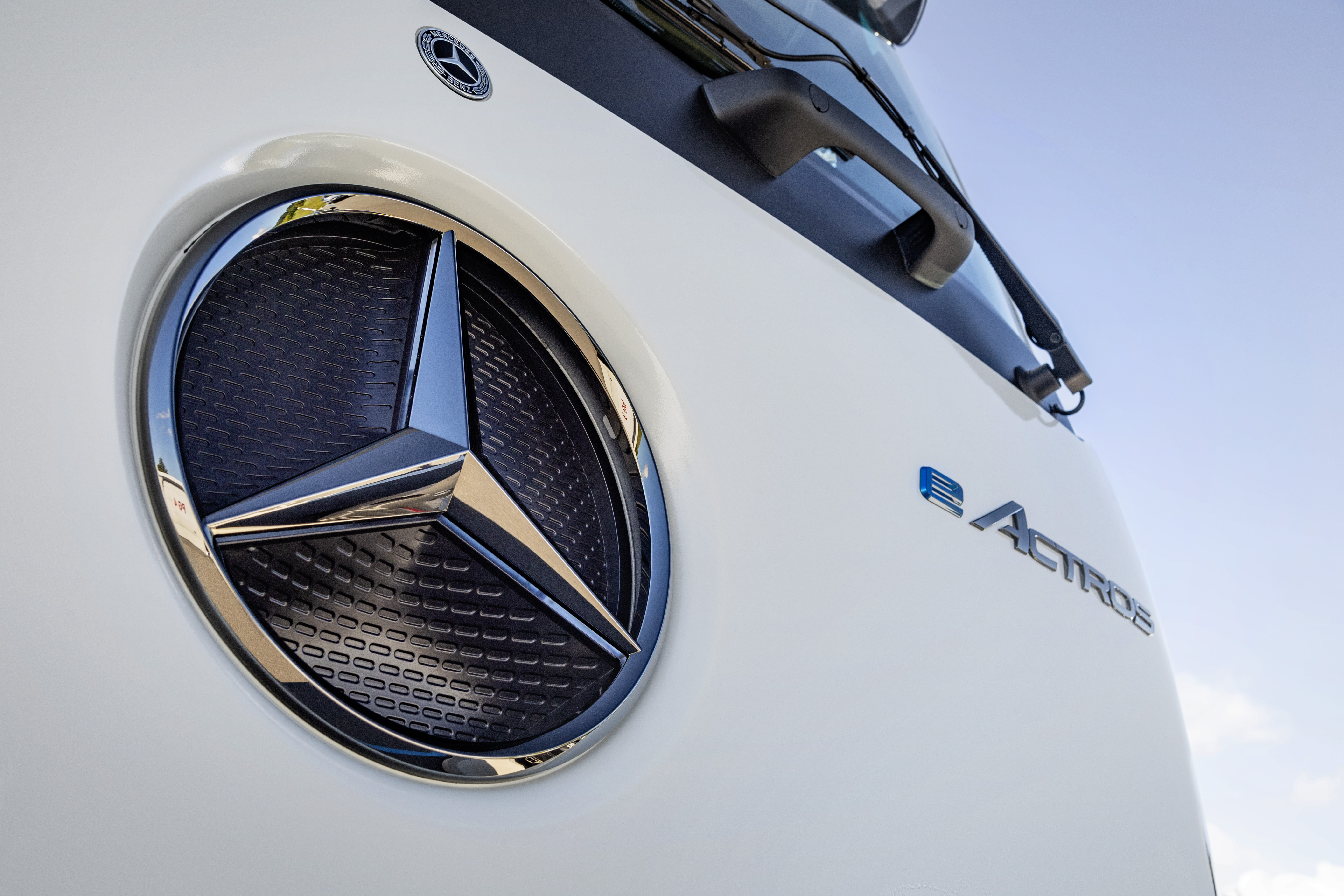
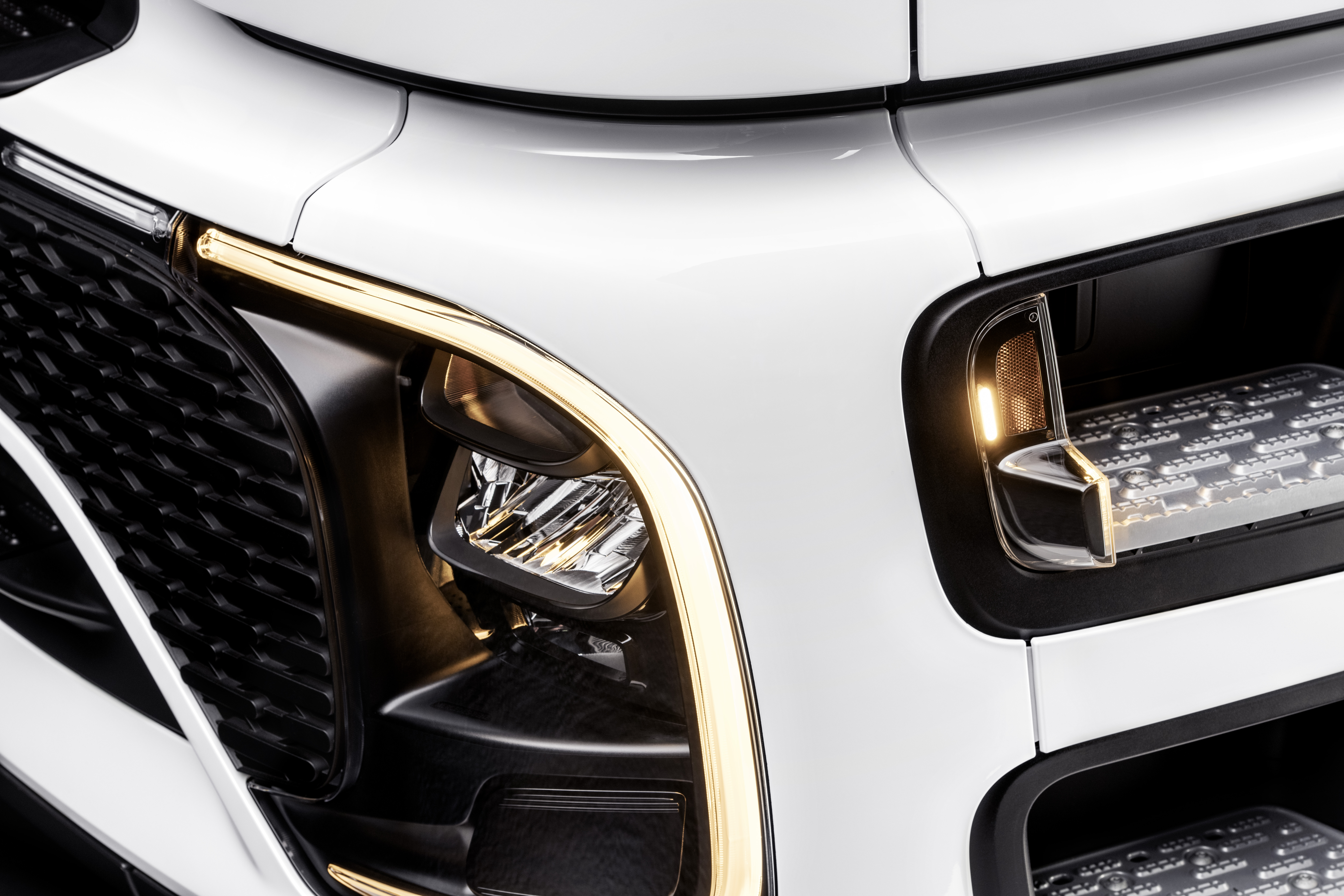
The eActros 600 has three battery packs, each with 207 kWh5. These offer an installed total capacity of 621 kWh. The batteries are based on lithium iron phosphate cell technology (LFP) and are characterized by a long service life. The development engineers at Mercedes-Benz Trucks have designed the eActros 600 to meet the same requirements on the durability of the vehicle and components as a comparable conventional heavy-duty long-haul Actros. That means up to 1.2 million kilometers in ten years of operation. After this period of use, the battery state of health should still be over 80 percent. Moreover, in contrast to other battery cell technologies, approximately 95 percent of the installed capacity can be used with LFP technology. This makes a higher range with the same installed battery capacity possible.
Innovative drive technology – Predictive Powertrain Control in the eActros 600
Mercedes-Benz Trucks has developed a new 800-volt electric axle with two electric motors and a four-speed transmission specifically for use in heavy-duty long-haul transport. The electric motors generate a continuous output of 400 kW as well as a peak output of 600 kW and ensure powerful acceleration, high driving comfort and high driving dynamics. The full motor output is available most of the time with almost no interruption in torque.
In addition, with an anticipatory driving style, electrical energy can be recovered through recuperation, which is fed back into the batteries of the eActros 600 and is then available again for the drive system. Recuperation puts less strain on the brakes of the eActros 600, which is a positive side effect. Depending on the situation, the driver can choose between five different recuperation levels. One-pedal driving can also be optionally enabled on the touchscreen in the digital cockpit – i.e. deceleration by means of recuperation with reduced actuation of the mechanical brake.
The eActros 600 features the tried-and-tested Predictive Powertrain Control (PPC) cruise and transmission control, which is specially tuned to the electric drive system. The anticipatory drivetrain control automatically takes into account the topography, course of the road and traffic signs for the most efficient style of driving. Route information from the navigation system is now included to facilitate better recognition of the situation on the road ahead. This allows the driver to avoid unnecessary braking, accelerating and shifting and to exploit the battery energy as efficiently as possible.
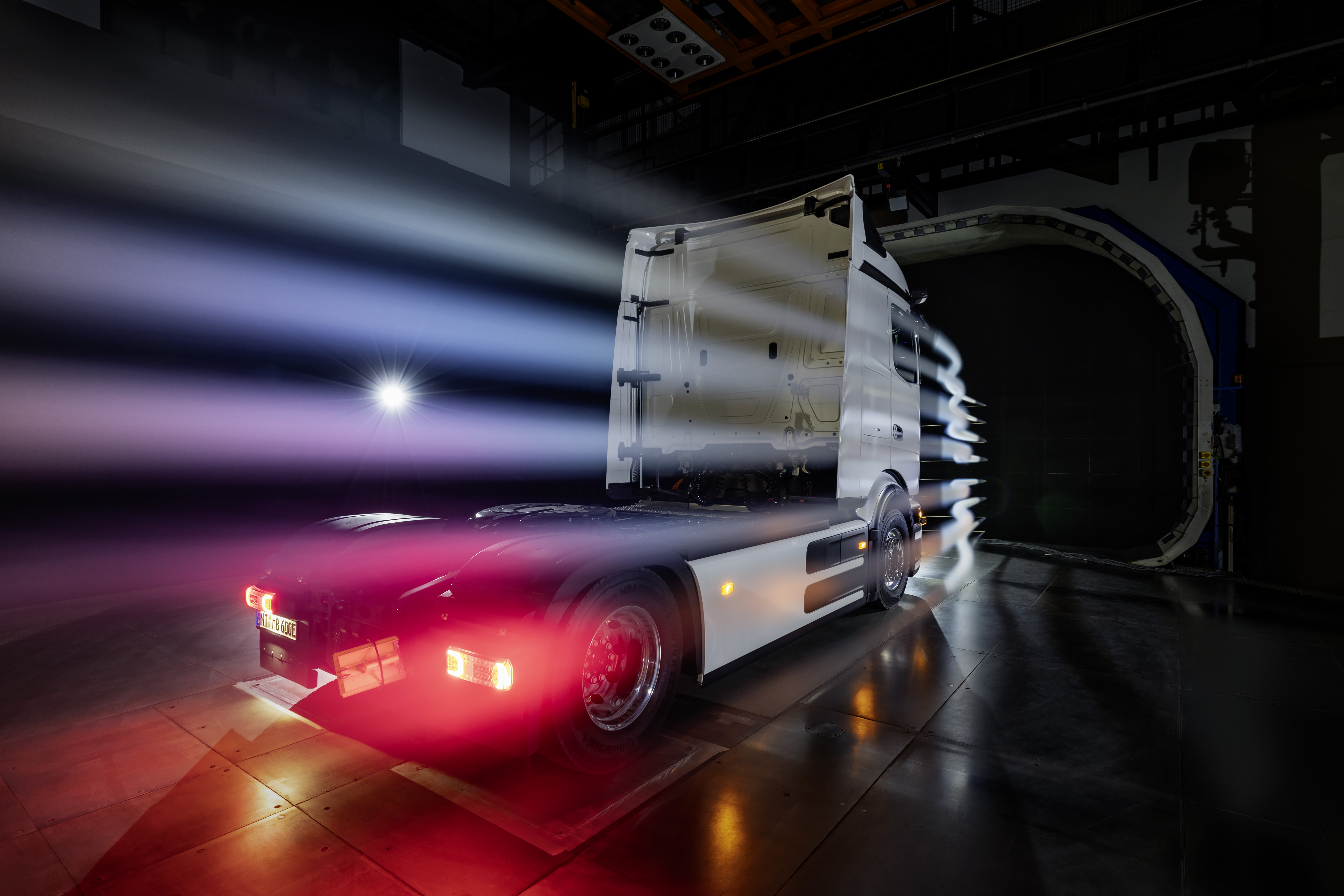
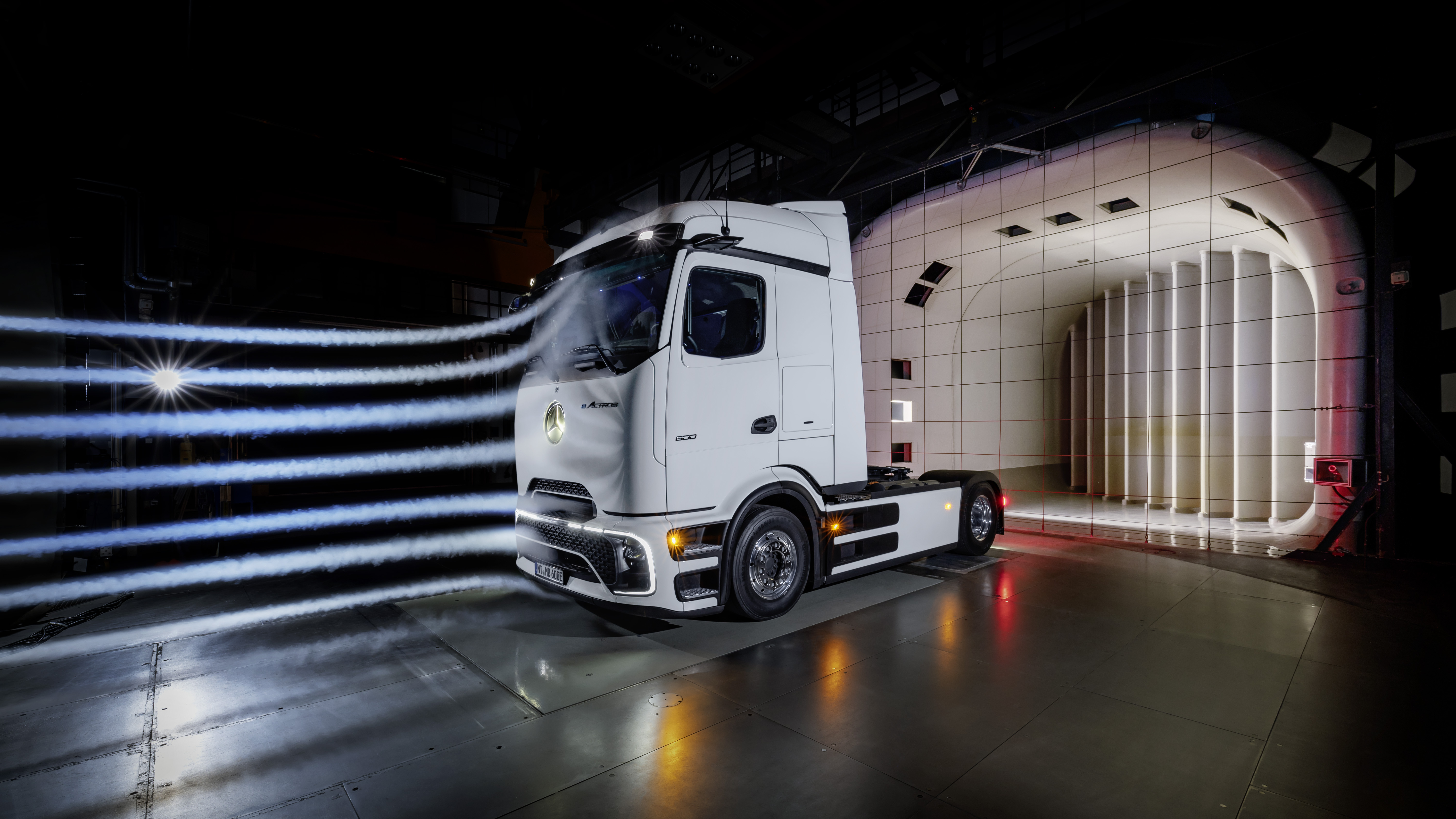
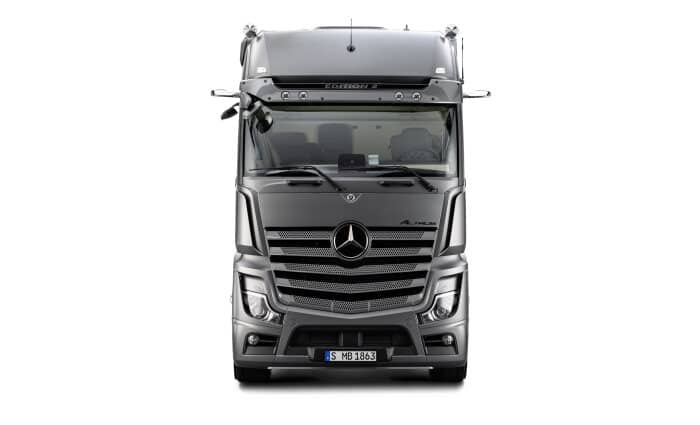
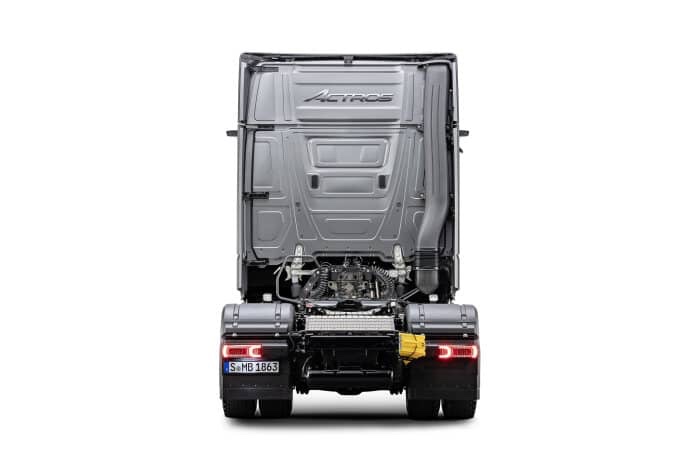
The new design language of the driver’s cab of the eActros 600 is characterized by particularly efficient aerodynamics. This is achieved with the large, completely closed and rounded-off front hood, an optimized bumper, including underbody paneling, an aerodynamically improved driver access and extended end flaps designed like sails. Air deflectors on the A-pillars, an additional spoiler on the roof and a sealed motor compartment complement the aerodynamic improvements to the cab. Over and above this, the cab is equipped with aluminum step plates, a new headlamp concept with matrix LED headlamps and an LED light strip. Mercedes-Benz Trucks markets the cab under the “ProCabin” name.
Specifically with battery electric trucks in long-haul operation, improved aerodynamics are of decisive importance as air resistance is one of the main factors influencing energy consumption. In addition, reduced air resistance means that more energy can be recovered through recuperation, leading to a longer range.
Extending the front by 80 millimeters made it possible to achieve the particularly aerodynamic shape of the new cab. This streamlined shape was developed in a multitude of in-house air-flow simulations as well as wind tunnel and on-the-road measurements. This enabled the ProCabin’s cW value to be lowered by nine percent6 in comparison to the Actros cab currently in series production. This aerodynamic improvement reduces the vehicle’s energy consumption and makes a decisive contribution to the range of 500 kilometers1 achieved by the eActros 600.

The eActros 600 is very quiet on the road for the benefit of the driver and its environment. To ensure that, for example, vulnerable road users such as pedestrians or cyclists can still notice the electric truck in their surroundings, it is equipped with an external Acoustic Vehicle Alerting System (AVAS) in accordance with legal requirements. Depending on the driving conditions, sounds are played for forward or reverse travel. In addition, the sound varies depending on the vehicle speed and accelerator pedal position, so that good acoustic perception is possible in urban traffic. The futuristic sound spectrum of the AVAS in the eActros 600 is designed to take into account the appearance of a heavy vehicle and to contribute to better recognizability in urban traffic. With the eActros 600, Mercedes-Benz Trucks is advancing its vision of accident-free driving. As was the case in previous years with the manufacturer’s vehicles, the installed safety assistance systems go beyond the legal requirements in many areas. This also applies to the General Safety Regulation adopted by the EU Commission. From mid-2024, the regulation prescribes the addition of systems as standard equipment for all new vehicles. The safety concept of the eActros 600 is based on the further development of tried-and-tested safety assistance systems. The basis for this is a completely new electronics platform which involves what is known as sensor fusion to merge radar and camera data for an even larger view to the front and side. For this purpose, the electronics platform offers 20 times higher data processing. The total of six installed sensors – 4 short range radars and one long-range radar – as well as the multifunction camera in the windshield cover an angle of 270 degrees around the vehicle.
The eActros 600 will be produced on the existing assembly line at the largest truck assembly plant of Mercedes-Benz Trucks in Wörth am Rhein – in parallel to and flexibly alongside the trucks that will continue to be equipped with a diesel drive. In Wörth, it will also be equipped with the electric drive components from the Mercedes-Benz plants in Mannheim, Gaggenau and Kassel. Like the Wörth site, the three locations are also undergoing a transformation from diesel technology to competence centers for emission-free transport. Installation in Wörth takes place in several production steps, including the installation of the electric axle, the high-voltage batteries and the front box, which is a complex technology module with several control units, high-voltage components and an electric air compressor. Once all high-voltage components have been installed, the entire system goes into operation and the truck is ready to drive.

Merry Christmas Bloggers!!

Dual Fuel Heavy Truck

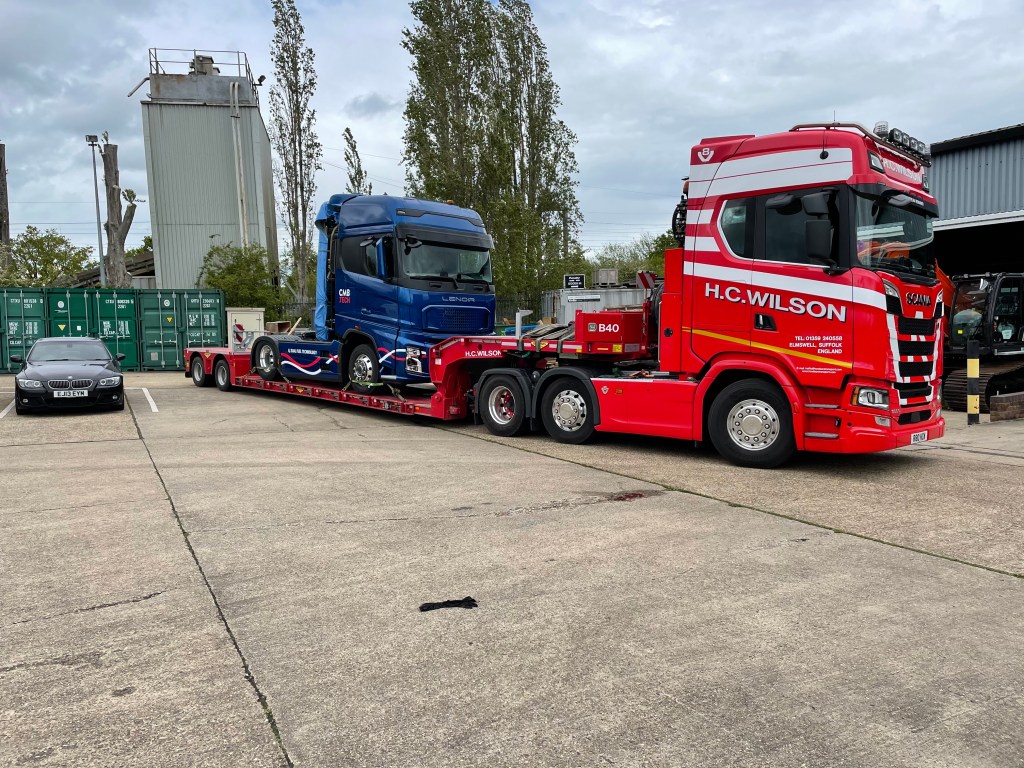
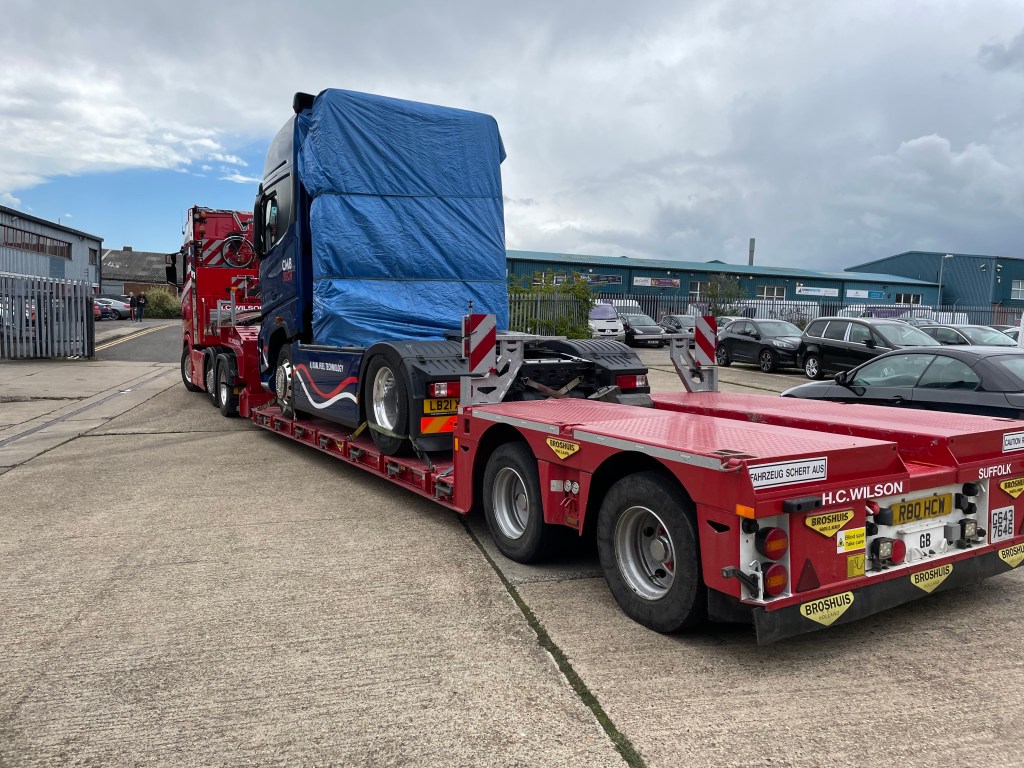
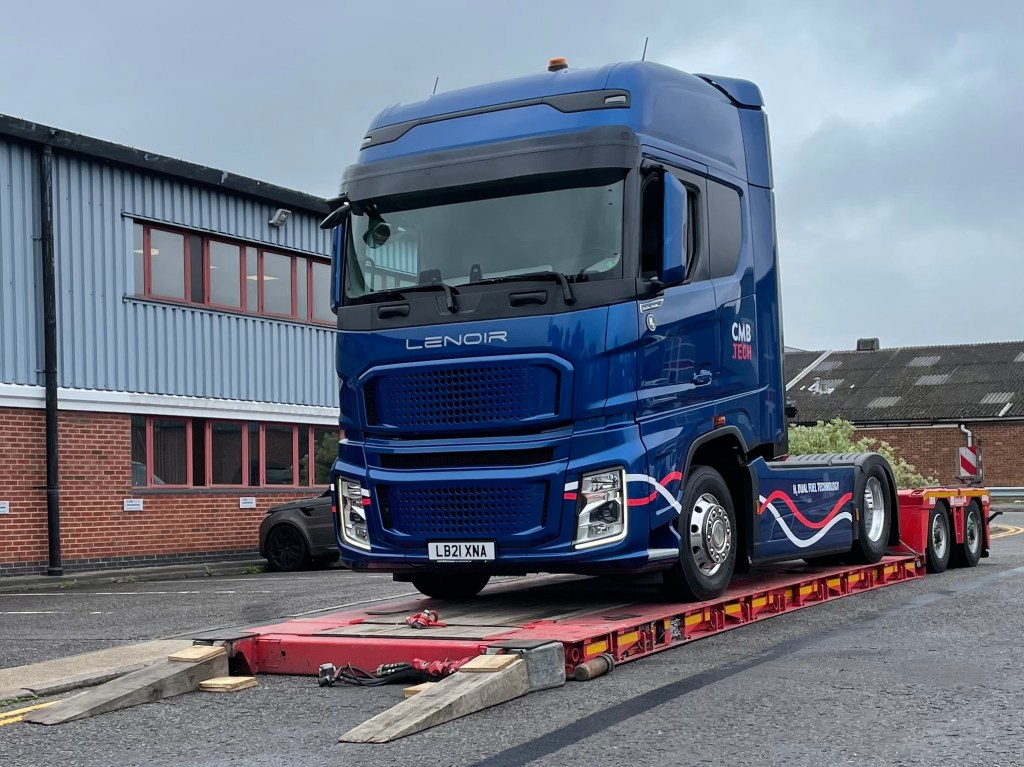
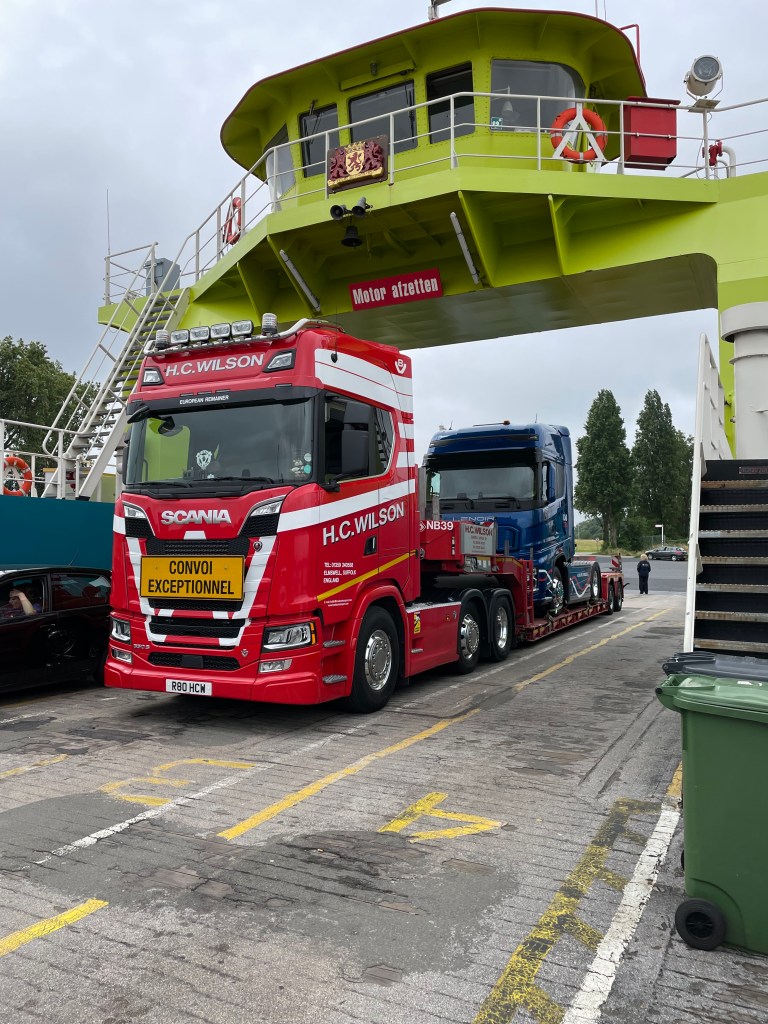
HC Wilson Transport are no strangers to high profile jobs and I’d consider the launch of one of first main stream duel fuel Hydrogen trucks to be just one of those. This truck has been developed by a company in Brentwood, Essex by the name of CMB Tech, using a Ford F-Max tractor unit. As we all know and read, the search for a suitable and practical alternative to diesel is on and as yet there has been nothing that will allow heavy trucks to do the range that you can currently get from a diesel. Electric trucks work but seemingly only on regional work where you can charge up and get round your day and home again on a single charge. Yes fast charge points are the answer so you can top on as you go about your days work, but honestly, does anyone know where you can stop and plug in anything bigger than a car or van? Electric will work for some but with the serious lack of parking facilities in the UK where do the government suggest we charge up. I didn’t use a question mark there as it’s not a question due to there being no sensible answer.

CMB Tech seem to be leading the independent charge on converting and applying Hydrogen technology to a multitude of vehicles and that has to be a good thing. Hydrogen vehicles are being looked at by the truck manufacturers and Mercedes-Benz have a prototype up and running but this isn’t likely to be mainstream until at least 2027, so perhaps a dual fuel conversion may be an option for those who want a quicker solution. According to the CMB Tech website their Hydrogen Truck 2.0 is being tested and can offer a saving of 80% on CO2 emissions over a conventional diesel. You can read more about the vehicles CMB have developed by clicking HERE.

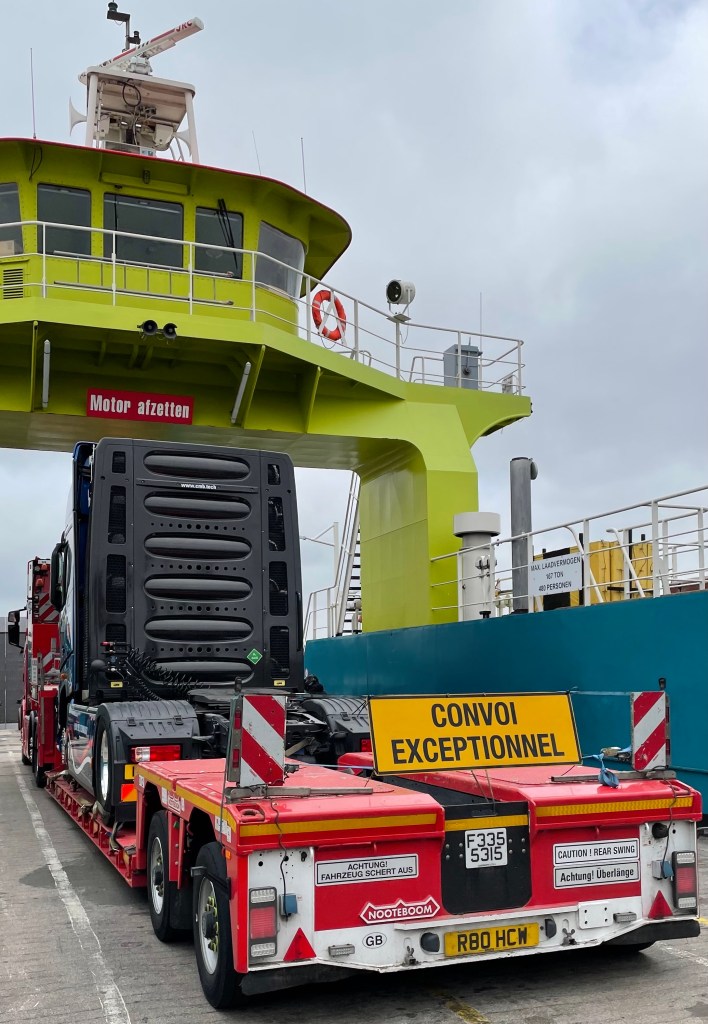
Wilson’s driver Ady Willis was tasked with both delivery and collection of the truck from CMB’s Essex workshops and taking the truck to Belgium for its official launch. I need to point out that Ady cleared all this with CMB so that’s why I can publish it on the blog. The truck may be based on a Ford but currently the hydrogen option isn’t offered by Ford themselves from what I can see. As well as some cracking photos, driver Ady offered a few words about the job;

“In the last week of May 2021, I collected the truck from Hutton, Brentwood (CMB Tech) and took it out to Antwerp Belgium for the launch. This included the truck being presented to the Belgium prime minister. Then in the last week of June I returned to pick it up again and return it back to its UK base. It is a duel fuel truck. The vehicle uses Ford’s 6 cylinder 12.7 litre engine with 500bhp. The 4×2 chassis sits on Fords 3600mm wheelbase, all in all it made for a nice different kind of trip”

Personally, even though I work in the industry I can alternative fuels coming for sure and all heavy truck manufacturers are working on solutions which is great. The problem and delay in all of this will be suitable infrastructure for everything to run on. For me the government are no where near having a working electrical charge network for trucks in the UK and goodness knows how that will work if you were to go international in an electric truck, just another toll box? Charging network at manufacturers service centres? Who knows. As for gas, that’s a non starter for me, but hydrogen, well it seems like it could just be the answer that will work for everyone involved. We will just have to wait and see, we’ll done to CMB Tech for producing such a good option, let’s hope we hear more about it in the mainstream press.

New DAF……or not!

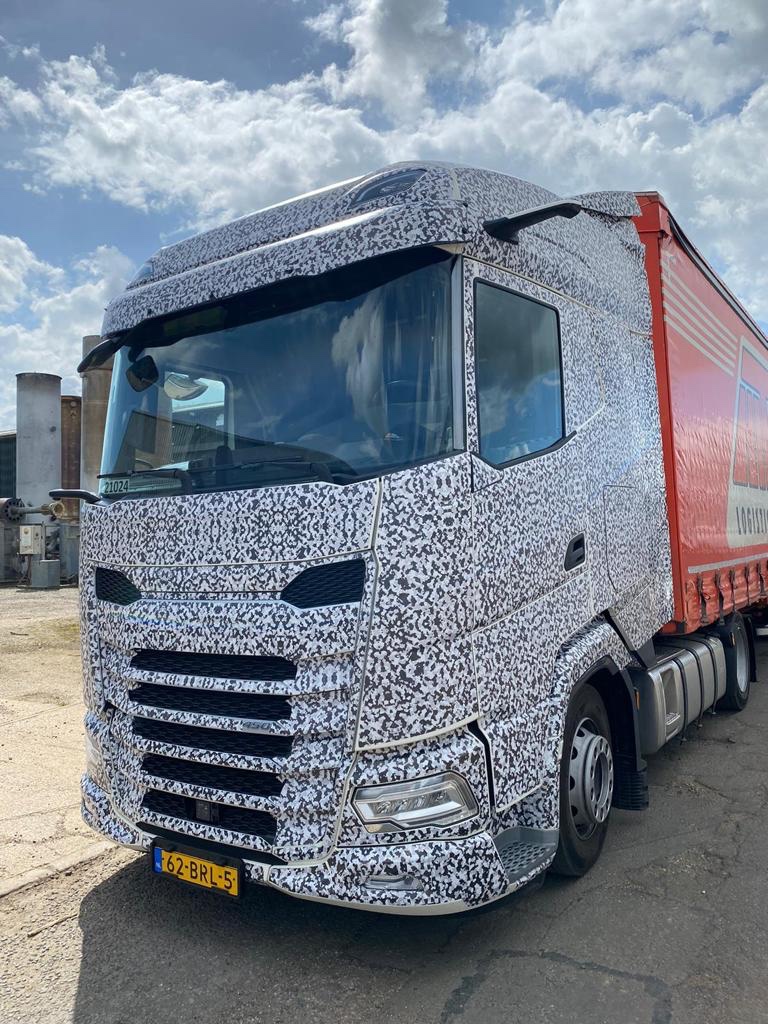
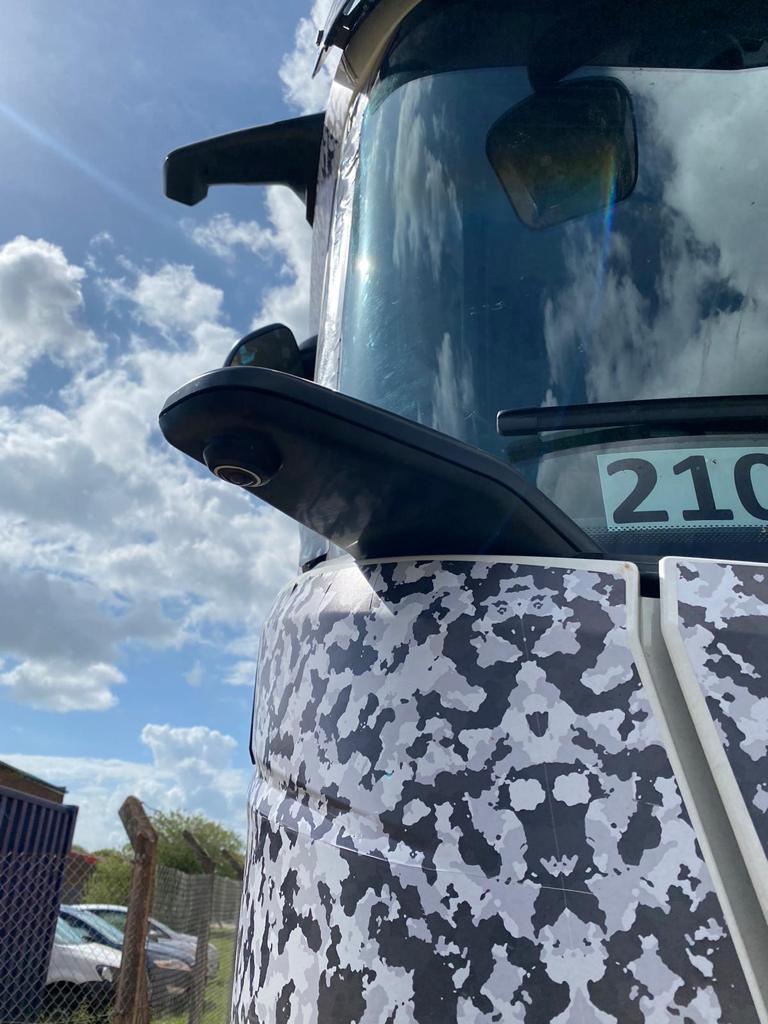
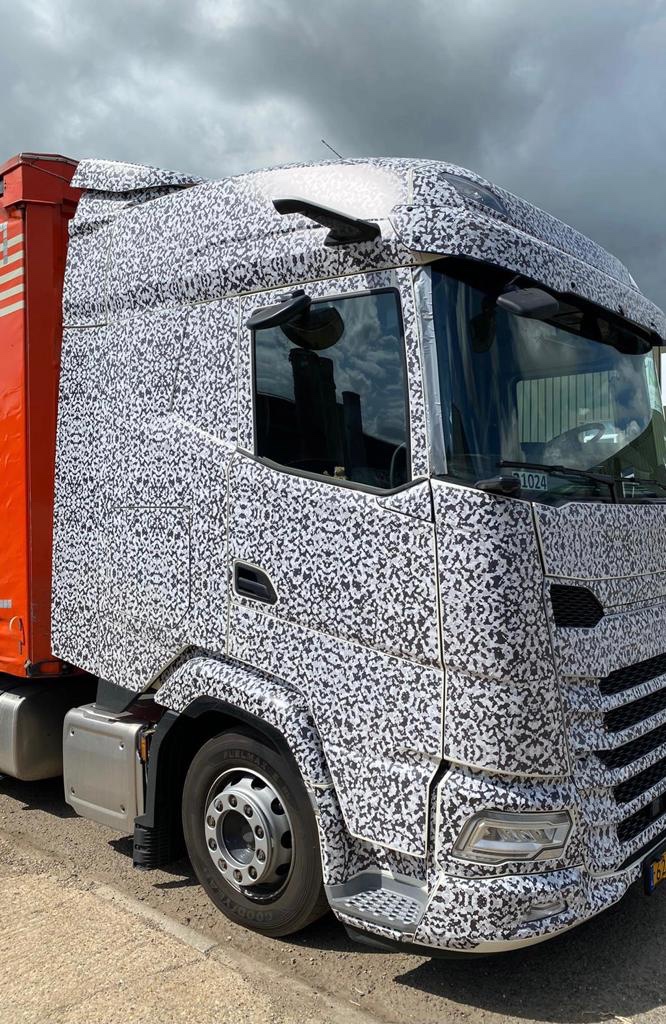
Spotted today in deepest Suffolk, it could be the new DAF. Looks like a new DAF, has DAF on the fuel tank but according to a friend of mine who recently asked for a quote on a new DAF their isn’t one. Anyway what ever it is, I think, has potential. The driver was under strict instruction for no photos of the interior but it looks all new, although this one seemed to have the “normal” sized engine tunnel we all know the current DAF has. I wonder if the there will be flat floor version? This had a fairly large side air deflector on the cab but I can’t help thinking or feeling that the cab seems deeper than the current range. I think we’d agree that this would be the equivalent to the current Space Cab XF and there is likely to be a taller cab offering. Note the nifty blind spot camera on the corner deflector and also note the new gaffer tape on the windscreen! Really interested to see and know more about this, if indeed it is a new DAF. If like me you want to know more, you can sign up to the launch of the new DAF by clicking HERE: Start The Future. Hopefully we will see more of this new Dutch Delight over the next few months, I have to say I think these will be rather nice, then again if it ain’t Dutch, it ain’t much, right?

770 Swedish Horses

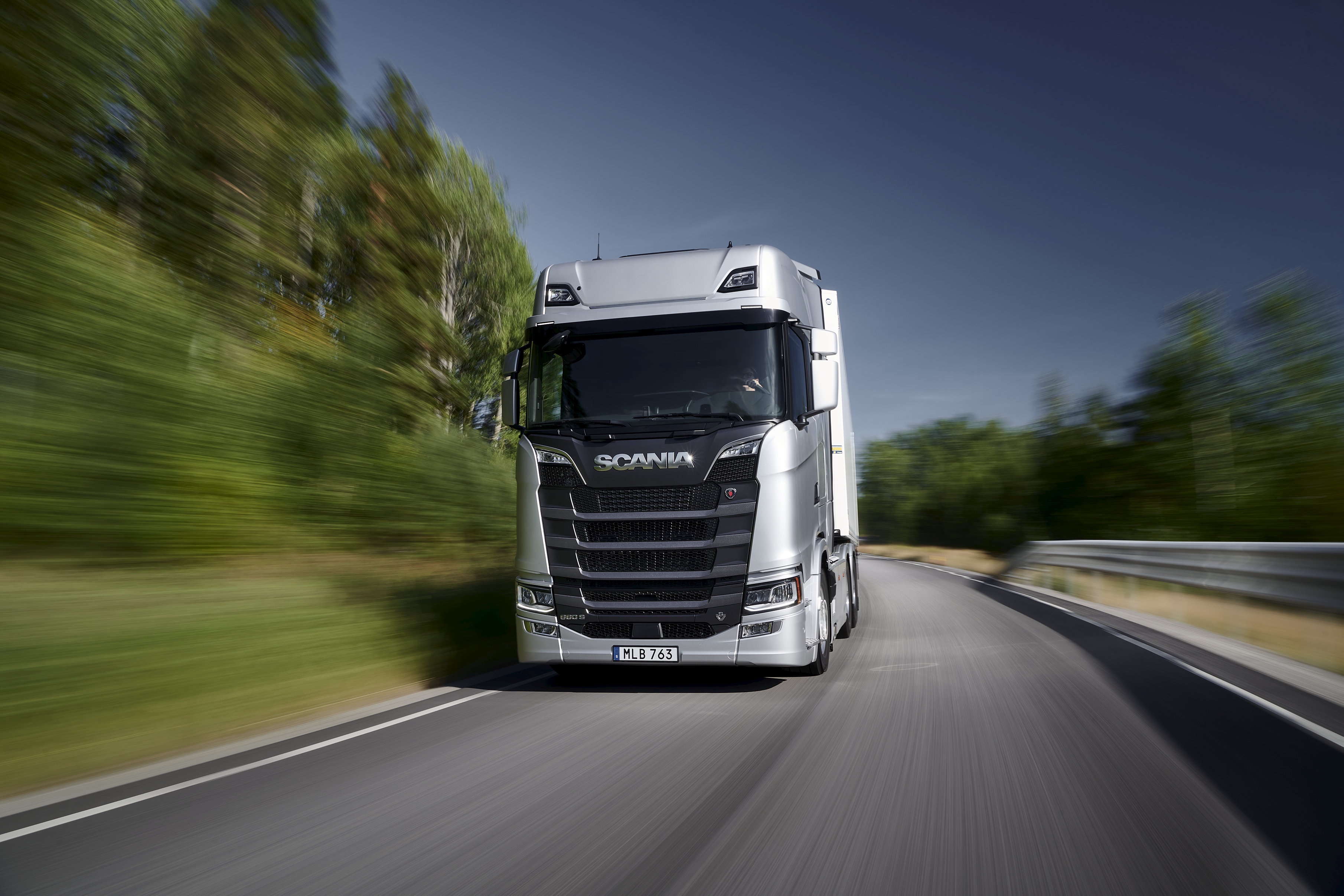
Introducing the new Scania V8 range
• Four new V8 engines and powertrains offer fuel savings of up to 6%
• 530, 590, 660 and 770 hp – a line-up of unsurpassed V8 power
• Low internal friction, updated turbocharger and smart auxiliaries
• Updated aftertreatment system and performance
• Longer and heavier trucks offer increased transport efficiency and lower CO2 emissions, both with or without biodiesel fuels
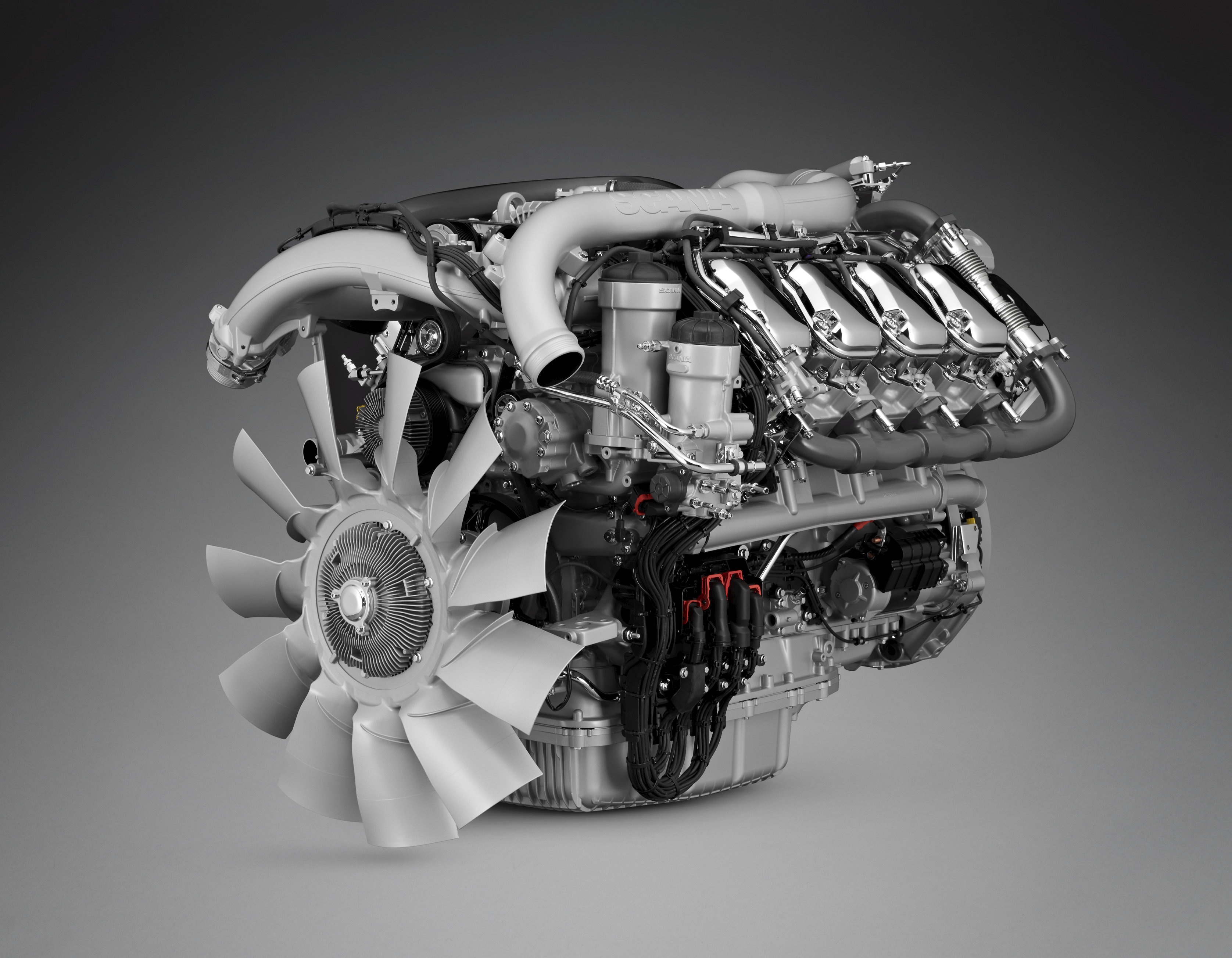
Scania’s new V8 engines not only offer record level power but vastly improved fuel efficiency as well. The total savings can reach up to six percent – or even more – under the right conditions, when the new G33 gearbox is included in the powertrain. Fuel savings of that magnitude make a huge difference of course, both long term for the climate and here and now for the haulier.
“While shifting to fossil-free transports, we all must do everything to improve our current solutions,” says Alexander Vlaskamp, Executive Vice President, Head of Sales and Marketing. “You cannot let your house burn down simply be- cause a new one is under construction. The transition must be seamless”.
The fuel savings are the result of extensive fine-tuning and development by Scania’s engineers, involving technologies in the fore-front of internal combustion engine development. Among them, and provided by more than 70 new parts, are reduced internal friction, higher compression ratios, improved aftertreatment-systems and a new powerful engine management system (EMS).
While future, electrified transports are on top of the agenda, the world still depend on transports carried out with trucks powered by internal combustion engines – and that is why Scania’s new powerful V8 engines play such an important role.
“A typical long-distance truck in Europe covers around 150,000 kilometres per year,” says Vlaskamp. “A reasonable saving on markets where longer and heavier combi- nations are permitted can be up to 3,000–4,000 litres annually for a truck with our new V8 – a tremendous achievement in every respect”.

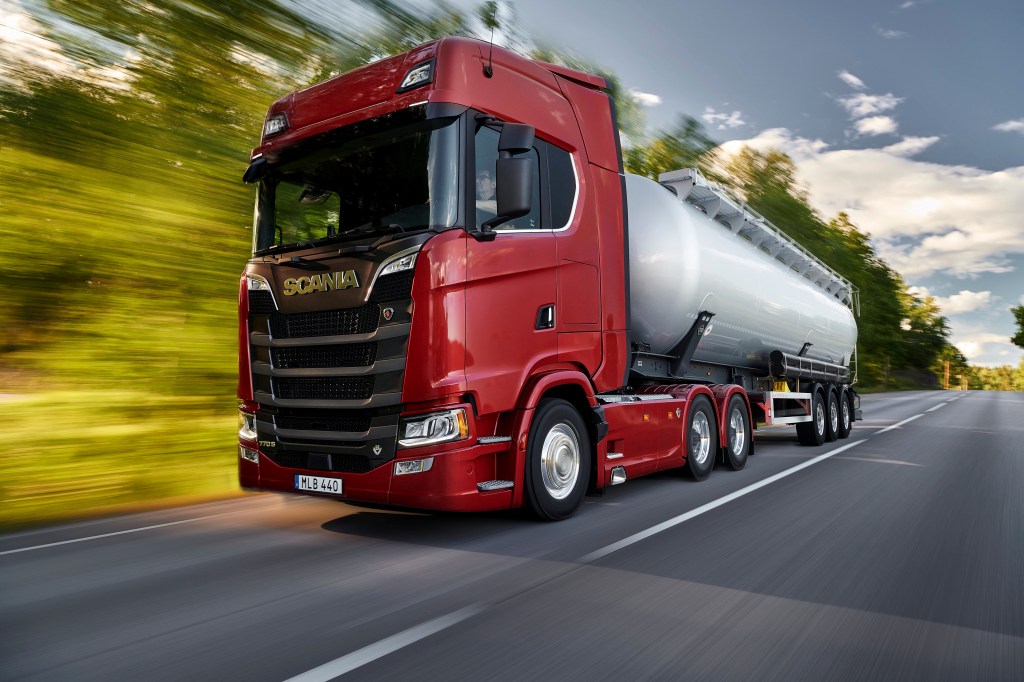
Most spectacular and of certain interest in the new V8 generation is the 770 hp, 3700 Nm top-of-the line version – probably the most powerful, factory-built truck engine in production today. Where and when is all this power asked for?
“This is, of course, not for everyone, but we see a growing demand for trucks capable of handling GTWs of 60 tonnes and above, especially for road-going combinations,” says Vlaskamp. “The fastest way to increase transport efficiency is with longer and heavier truck combinations. The added fuel for a heavier vehicle is compensated by the greater payload capacity. The CO2-per-tonne calculation is favourable, and in addition there is the opportunity to run your Scania V8 truck on renewable biofuels”.
It is natural that trucks with Scania’s V8 engines are highly in demand in countries where greater GTWs are permitted – particularly in the Nordic countries. But also countries such as Italy and Spain (and certain markets outside Europe) are fond of V8s, due to hilly terrain with many steep and challenging roads.
“We have a clear picture of where the first 770 hp trucks will start making a differ- ence,” says Vlaskamp. “There is a strong rationale for ordering such a truck. These customers are looking for the best total operating economy, well aware of the fact that more payload means better efficiency, increased revenue and higher residual value. But I know that some of our customers also will become extra heartened by the sheer joy and emotion of operating such a magnificent working tool.”

Actros Edition 2

Actros Edition 2: limited special model with a “wow” effect

Whereas with the new Actros F, Mercedes-Benz Trucks especially focuses on customers who mainly want the greatest possible functionality from a commercial vehicle with the three-pointed star, the Actros Edition 2, which can be ordered from January 2021, caters to an entirely different target group: innovation-loving professional drivers and self-driving hauliers whose truck is their home and who place great value on individual style and high comfort. Actros Edition 2 drivers have a strong emotional bond with their vehicle, which is more than a working and driving machine to them. With the special model, hauliers enhance their company’s image while also holding a trump card against the current shortage of drivers.

Up to 40 additional options for interior and exterior as well as design elements from Edition 1 give the Actros Edition 2, limited to 400 vehicles, an unmistakeable character. The result: a premium Actros with a “wow” effect and features that highly distinguish it from the series models of the internationally successful model range.

Driving, working and living in a luxurious environment

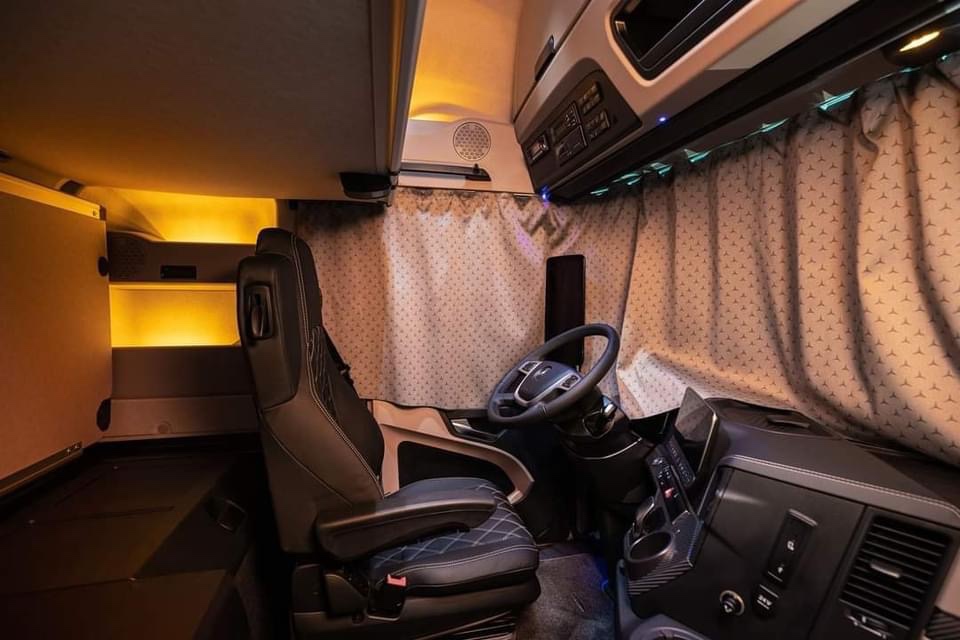
A whole range of equipment features highlight the Edition 2’s sense of luxury. Among these, the stylish interior boasts a dashboard and door handles covered in nappa leather, several interior parts in a carbon-fibre look as well as a roof hatch with ambient lighting. The new home screen in the Multimedia Cockpit’s primary display as well as the Edition logo out of polished and brushed aluminium on the passenger side are also real eye-catchers. The top bed comes with bedding and has a width of 900 millimetres. An all-around curtain – almond beige on the inside, black on the outside – ensures privacy in a stylish way. This equally applies to the curtain with the Mercedes-Benz three-pointed star in front of the bed.

The highlights of its exterior include, among other things, exclusive side wall decals with a star pattern, the “Edition 2” lettering in the lacquered sun visor, the Actros emblem in front, the Actros lettering on the upper side of the cab’s back wall, four additional LED spotlights in the sun visor as well as three LED working lights behind the cab. From the side, the stainless steel entrance steps are especially noticeable. The rear axle caps are also stainless steel, with protective wheel nut caps. Additionally, an illuminated Mercedes-Benz three-pointed star with black aperture and several decorative grille elements in dark chrome also comes as standard, while the headlamp surround is darkened.

The Edition 2 is offered for all two- and three-axle variants of the current Actros generation with GigaSpace and BigSpace cabs as a left-hand or right-hand drive. The cab paint is freely selectable and can be tailored specifically to the customer’s company colours, while the vehicle front is always painted in moonstone grey metallic, which ensures a high recognition value.

The Edition 2’s series equipment contains the following six packages:

  • Safety Package with a number of active driver assistance systems
  • Comfort Package with LED ambient lighting, shaving mirror, refrigerator and many other amenities for comfortable living
  • Driving Package with leather steering wheel, electric sun blind and more
  • Sight Package with, among others, bi-xenon headlights, rain sensor and LED rear lamps
  • Media Package with sound system, notebook holder, additional 12/15 V socket
  • Extra Line with LED position lights in the MirrorCam, LED indicators and Welcome Light

In addition, the Actros Edition 2 also comprises individually configurable service packages such as the new, mileage-based service contract Mercedes-Benz CompleteMile as well as made-to-measure leasing, financing and insurance solutions.

Excellent security features and tailored connectivity

Mercedes Benz Trucks’ goal with the Edition 2 is the same as its goal with the current Actros generation: to contribute to accident-free traffic and advance toward the vision of fully accident-free driving by utilising active safety assistance systems. For this purpose, the Edition 2 is equipped with the emergency braking assistant Active Brake Assist in its fifth generation (ABA 5), the optional Active Drive Assist (ADA) for partially automated driving (SAE level 2), the standard MirrorCam that replaces main and wide-angle mirrors as well as the Sideguard Assist with pedestrian and cyclist detection available ex-works. In conjunction with these assistance systems, the further developed Predictive Powertrain Control (PPC) is also impressive. The system not only saves a lot of fuel, but is also a relief for the driver on rural routes.

The driver is shown the activities and functions of systems such as ABA 5, ADA or PPC in the user-friendly Multimedia Cockpit, with its two colour displays forming the centrepiece of the Human-Machine Interface (HMI). In addition, further HMI innovations such as the display of the next navigation event in the primary display or the total weight of tractor unit and trailer are also included. For PPC, the kilometre display is no longer shown as a bar diagram but in absolute values, and the battery status is also displayed.

If you decide to purchase the interactive Multimedia Cockpit as an upgrade to the standard version, you also receive fast access to the Mercedes-Benz Truck App Portal. This enables haulage companies to harness the new opportunities of connectivity and equip their vehicles with efficiency- and comfort-enhancing apps such as telematics services from Fleetboard or third-party providers. The new logistics application HABBL from Fleetboard Logistics is new here. This software enables you to easily integrate trucks from your own fleet as well as from subcontractors into the dispatching process, provide assignment data and therefore facilitate communication with the drivers: Everyone involved in the transport process – driver, dispatcher and end customer – always receives the required information. This increases process quality while creating a high level of transparency